Français
  English
  العربية
  简体中文
简体中文  香港中文
香港中文 

Understanding The ESR In The UAE
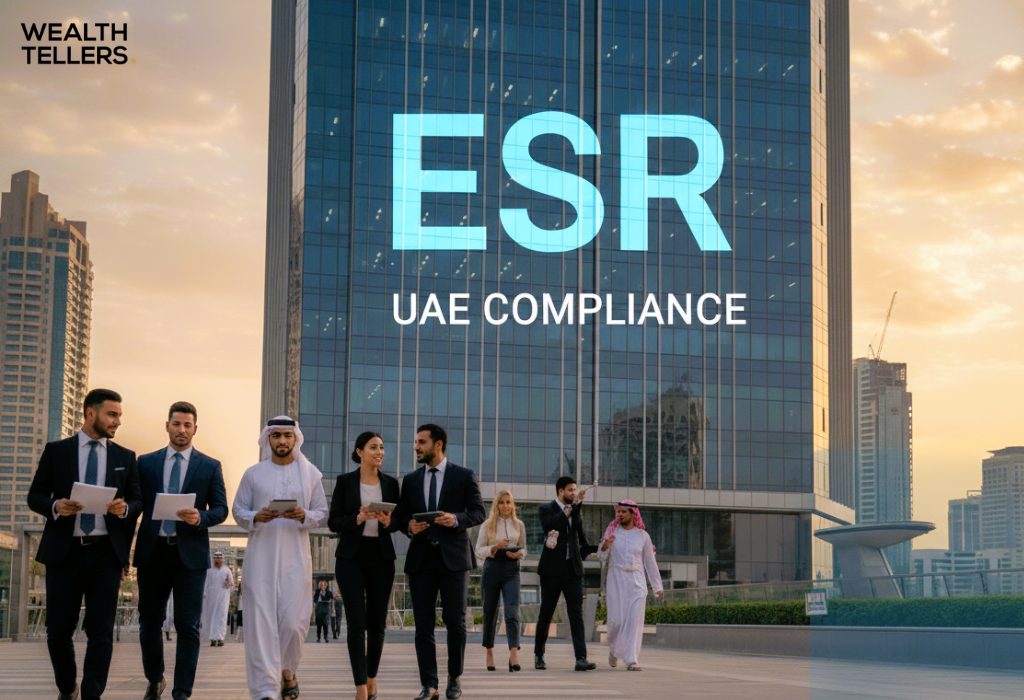
If you plan to launch or expand your company in the United Arab Emirates, you might be asking yourself, “What is the ESR?” The Economic Substance Regulation (ESR) is a framework introduced to ensure that businesses engaging in certain activities maintain a genuine economic presence within the country. This means you must show that your company conducts core income-generating operations in the UAE rather than relying on a purely “on-paper” setup.
The UAE introduced this regulation to align with international standards and to reduce practices that shift profits elsewhere without real local business substance. By complying with ESR requirements, you demonstrate that your venture adds measurable value to the UAE economy, whether you operate a holding company, service-based firm, or another type of entity.
Why The ESR Matters For Your UAE Business
Complying with the ESR goes beyond just fulfilling a legal obligation. It offers a chance to improve how your business is structured and perceived. Regulators want to see that you are not simply taking advantage of favorable tax conditions but that you also deliver tangible economic benefits to the region. This often serves as a strong signal of credibility.
If you are considering a new venture, ESR compliance can become a meaningful point of differentiation, showing your stakeholders and partners that your enterprise is built on solid ground. It also helps pave the way for smoother dealings with local authorities, can strengthen banking relationships, and ensures you remain in good standing with the various UAE business licensing agencies.
Key Activities Covered By ESR
While almost every business should be aware of ESR, certain “relevant activities” tend to draw more attention. If your company partakes in any of the following, you likely need to file an ESR notification and possibly a detailed report:
- Banking services
- Insurance
- Investment fund management
- Headquarters activities
- Shipping
- Holding companies
- Intellectual property-enabled services
- Distribution and service centers
Not every company that engages in these areas automatically faces ESR requirements. You usually must prove whether the income you earn from these activities meets specific thresholds. However, if your operation prominently features any of these, it is wise to prepare documentation in advance. For more insights into structuring your venture effectively, you may want to explore different company designs outlined in business structures in the uae.
Understanding ESR Compliance Requirements
ESR compliance typically involves a combination of reporting and proof of genuine operations in the UAE. You must maintain adequate employees, office space, and operational spending relative to the nature and size of your business. The main points often include:
- Demonstrating real control and management of the company within the UAE.
- Showing a physical presence, including an office lease and local staff with relevant skill sets.
- Taking all core business decisions in the country, rather than deferring them to an overseas parent company.
Performing routine business tasks in the UAE underscores that your enterprise is more than a paper entity. Documenting these important details is essential, so consider setting up proper record-keeping procedures from day one.
How ESR Impacts Your Day-To-Day Operations
At first glance, ESR might seem like a series of mandatory filings. In practice, it encourages you to solidify local management and oversight, which can be beneficial for your daily operations. With an in-country presence, you can react more quickly to market changes, forge relationships with regional stakeholders, and align your team with cultural nuances.
You might consider hiring a local manager who can handle operational and strategic decisions. Having key decision-makers on the ground also fosters trust among clients and suppliers. Plus, if you ever need to file corporate tax return or demonstrate compliance with other regulations, your local presence can streamline those processes.
Filing Notifications And Reports
If your company falls under one of the relevant activities, you must file an ESR notification, even if your business does not generate any taxable income. This initial filing lets the authorities know your status and nature of activities. Afterward, depending on your income and business operations, you might need to file an ESR report that delves into the details of how you meet the substance requirements.
It is essential to track filing deadlines to avoid penalties. These deadlines often approach quickly, especially during times when you might already be juggling year-end financial tasks. For guidance on broader licensing processes or to get started with a new venture under local regulations, check out how to setup a business in the uae.
Common Penalties For Non-Compliance
Failing to comply with ESR can lead to considerable fines, administrative sanctions, and even revocation of your business license. Penalties typically scale up for repeated or continued non-compliance. This can disrupt your operations, negatively affect your reputation, and may force you to incur extra costs to regain good standing.
While the financial impact is significant, the potential harm to your brand can be even greater. An ESR-related violation could cause banks to question your legitimacy, make foreign investors wary, or block you from forming new partnerships. These situations underscore why it is essential to take ESR requirements seriously and address them proactively.
Steps To Meet ESR Obligations
Below is a brief checklist to help you approach ESR compliance in a structured way:
- Determine if your activity is relevant. Review the full list of ESR-relevant business categories to see if your income falls under any of them.
- Prepare an ESR notification. Submit this to the relevant authorities, outlining your business type and revenue sources.
- Assess substance requirements. Check whether your management, staff, and location in the UAE meet needed thresholds for economic substance.
- Record and monitor. Document all ongoing business activities carefully, including board meeting minutes, staff payroll, operational costs, and physical office details.
- Submit ESR report if applicable. Provide detailed evidence of how you meet each key point, such as local staffing, decision-making, and intellectual property usage.
By following these steps, you reduce the chance of errors and demonstrate your readiness to comply. If you are a foreign investor, you might find it useful to explore uae business setup for foreigners to integrate ESR best practices from the start.
Mistakes To Avoid
Some business owners mistakenly assume they can bypass ESR requirements if only part of their revenue derives from a relevant activity. Others misjudge local staffing needs and rely on token hires or shared offices to tick the compliance box. Remember that ESR is about demonstrating genuine substance. Regulators often inspect staffing levels, meeting frequencies, and operational outputs to validate your claims.
Another pitfall is missing filing deadlines due to confusion about reporting periods. Mark your calendar well in advance of submission dates, and confirm that the documented information is correct and verifiable. Failing to do so can lead to unintended non-compliance, even if your business is otherwise fully qualified.
Planning For The Future
ESR rules are likely to evolve as the UAE continues to refine its regulatory framework. Staying proactive helps. You might create a schedule for annual reviews of your operations, finances, and compliance protocols. This approach ensures your enterprise remains aligned with the latest government directives and demonstrates your commitment to responsible business practices.
Whether you are just getting started in the UAE or looking to fine-tune an existing venture, ESR compliance should be part of your overall plan. It solidifies your business presence, fosters trust with financial institutions and partners, and maintains a level playing field for all companies in the region.
Ultimately, complying with the ESR goes hand in hand with long-term success in the UAE. By focusing on real economic activities, you position yourself more favorably for growth, expansion, and partnership opportunities. Keep your documentation sharp, maintain genuine operations in the region, and you will be well on your way to running a fully compliant, thriving enterprise.